
What's Really Causing Your Acne Scars, Large Pores, or Rough Texture?

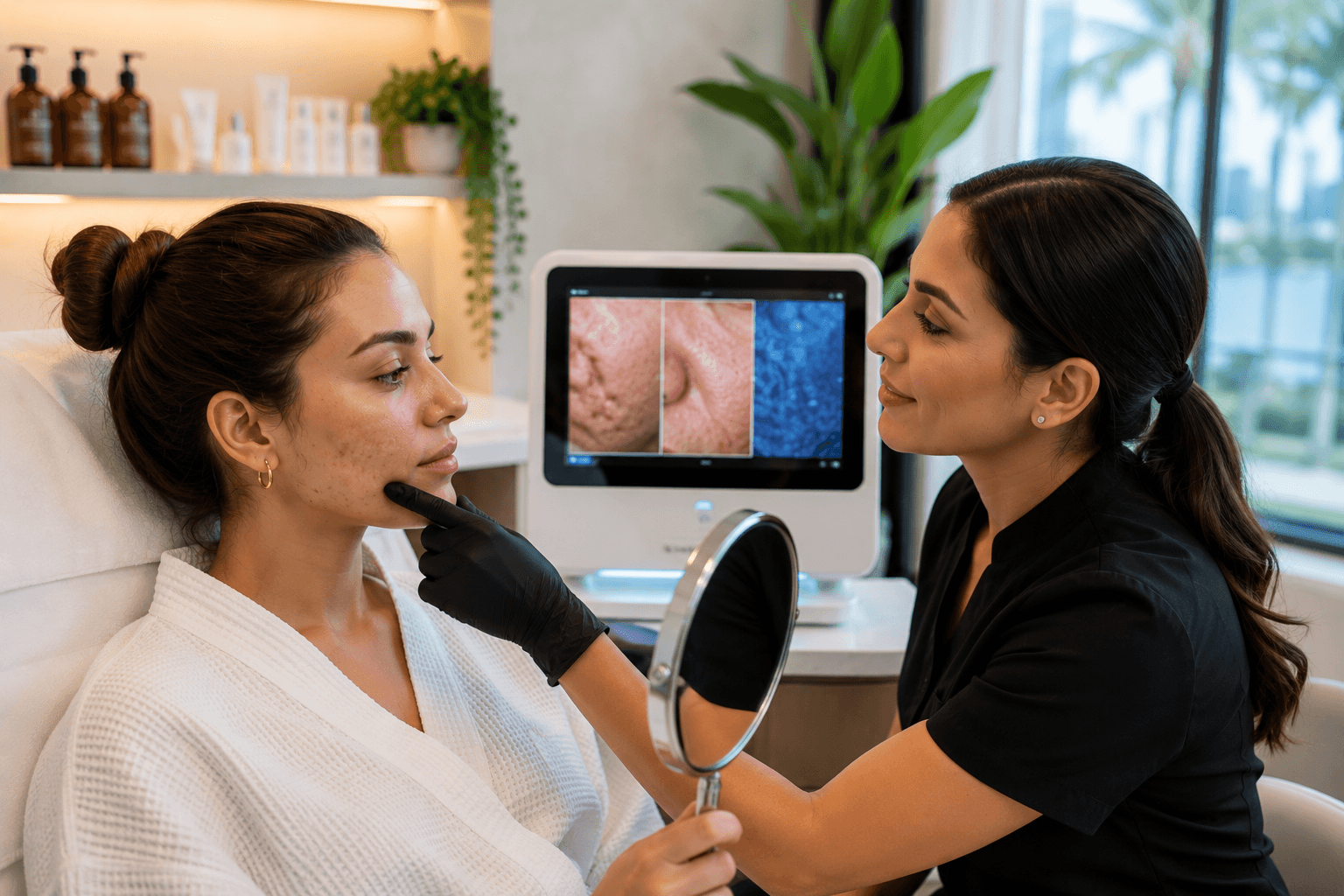
If you've spent years testing serums, retinoids, and "miracle" pore-minimizing creams only to look in the mirror and still see the same pitted scars or rough patches, you're not imagining it. Some skin concerns simply live too deep for a topical product to reach. Updated for August 2026, this guide breaks down what actually causes textured, scarred, or aging skin, why over-the-counter products tend to fall short, and how SkinPen microneedling has become one of the most trusted, dermatologist-recognized ways to rebuild smoother, firmer skin from the inside out.
What Causes Acne Scars, Enlarged Pores, and Uneven Texture?
Before we talk treatment, it helps to understand what's happening underneath the surface. Most textural skin concerns trace back to changes in the skin's structural support system, primarily collagen and elastin.
Why Do Acne Scars Form?
When a breakout becomes inflamed, it can damage the surrounding collagen as it heals. Instead of regenerating evenly, the skin repairs itself with a divot, an indentation, or a raised patch. This is why acne scars often feel different from the surrounding skin, not just look different. The deeper the original inflammation, the more likely the scar tissue disrupts your natural texture long after the breakout is gone.
What Makes Pores Look Larger Over Time?
Pore size is partly genetic, but it's also influenced by oil production, sun damage, and the natural loss of elasticity around the follicle. As collagen breaks down with age, the tissue around each pore loses its ability to "snap back," so pores appear stretched and more visible, especially across the nose and cheeks.
Why Does Skin Develop Fine Lines and Rough Patches?
Collagen production naturally slows starting in our mid to late twenties. Add in sun exposure, humidity fluctuations (something every Tampa resident deals with year-round), and everyday environmental stress, and skin can start to look uneven, crepey, or dull well before you'd expect.
Why Don't Over-the-Counter Products Fix These Issues?
This is the question we hear most often. Serums and creams work on the surface layer of the skin. They can hydrate, brighten, and support the skin barrier, but they generally cannot reach the deeper dermal layer where scarring and structural collagen loss actually occur. Retinol and vitamin C are excellent maintenance tools, but for skin that already has scarring, textural damage, or visible pore stretching, topical products alone tend to plateau in results. That's where a treatment designed to reach deeper skin layers, and prompt the body to rebuild its own collagen, makes a real difference.
What Is SkinPen Microneedling and How Does It Work?
SkinPen microneedling is an FDA-cleared treatment that uses a sterile, single-use cartridge of fine needles to create thousands of microscopic channels in the skin. This might sound intense, but the needles are incredibly precise and the depth is fully controlled, which is a major reason SkinPen is the most clinically studied microneedling device on the market.
Here's what happens: those tiny, controlled micro-injuries signal your body to kick its natural healing response into gear. That means new collagen and elastin production, ramped up right where you need it most. Over the following weeks, skin gradually rebuilds itself with fresher, more organized collagen fibers, which is what smooths out acne scarring, softens fine lines, tightens the look of enlarged pores, and evens out overall texture.
Unlike more aggressive resurfacing options, SkinPen microneedling works with your skin's own repair process rather than removing layers of tissue, which is part of why it's approachable for a wide range of skin tones and concerns. You can see the full treatment breakdown on our SkinPen microneedling service page, and it's one of the core offerings within our advanced skin treatment services.
Who Is a Good Candidate for Microneedling?
Most people are surprised by how many concerns respond well to this treatment. You may be a strong candidate for SkinPen microneedling if you're dealing with:
- Acne scarring, including shallow to moderate pitted or boxcar-type scars, addressed through our acne and breakouts treatment approach
- Enlarged or stretched-looking pores
- Fine lines and early signs of aging, which you can read more about on our fine lines and wrinkles page
- Uneven skin tone or lingering discoloration from past breakouts or sun exposure, covered further on our uneven skin tone and hyperpigmentation page
- Rough texture, dullness, or overall loss of skin firmness
That said, microneedling isn't right for everyone. Active breakouts, certain skin infections, keloid scarring tendencies, and a few medical conditions may mean it's better to wait or explore a different option. A quick consultation is the easiest way to find out, and it's always the first step we recommend before booking.
What Does Recovery and the Results Timeline Look Like?
One of the reasons microneedling has become so popular is the relatively easy recovery compared to more invasive procedures. Right after treatment, your skin will likely look flushed, similar to a mild sunburn, and may feel slightly tight or warm. Most people are comfortable returning to normal activities within a day, sometimes sooner.
Over the next several days, you may notice subtle dryness or light flaking as the skin renews itself. This is completely normal and part of the process. Visible improvements in tone and texture often begin within one to two weeks, but the real transformation happens gradually as new collagen continues forming over the following one to three months. This is why microneedling is considered a progressive treatment rather than an overnight fix, and it's a big part of why results tend to look so natural.
How Many Sessions Are Typically Needed?
For scarring, textural concerns, or more noticeable pore size, a series of three to six sessions spaced about four to six weeks apart is generally recommended to build meaningful, lasting collagen support. For general skin maintenance, tone refinement, or a pre-event glow, fewer sessions or an occasional touch-up may be all you need. Your provider can map out a realistic plan based on your skin's specific concerns and how it responds along the way.
How Does Microneedling Compare to Chemical Peels or Laser Resurfacing?
This is one of the most common questions we get, and the honest answer is that it depends on your skin and your goals.
Chemical peels work by exfoliating the surface layer of skin using acids, which is great for dullness, mild discoloration, and refining texture, but peels don't stimulate deeper collagen production the way microneedling does. They're a wonderful complementary treatment, not necessarily a replacement.
Laser resurfacing, such as our Aerolase skin rejuvenation treatments, uses targeted light energy to address concerns like redness, sun damage, and overall skin tone, often with little to no downtime. Laser and microneedling can actually work beautifully together as part of a broader skincare plan, since they approach skin renewal from different angles.
SkinPen microneedling stands out specifically for scarring and textural rebuilding because it works directly with the skin's physical structure rather than relying on light or acid-based exfoliation. If you're unsure which route fits your skin best, browsing our full skin treatment services or scheduling a consultation is the best next step.
Frequently Asked Questions
Does SkinPen microneedling hurt? Most clients describe the sensation as mild pressure or light vibration rather than pain. A topical numbing cream is typically applied beforehand to keep the treatment comfortable throughout.
How soon will I see results from microneedling? Some initial glow and tone improvement can show up within one to two weeks, but the deeper collagen-driven results from SkinPen microneedling continue developing over one to three months.
Is microneedling safe for darker skin tones? Yes. Because SkinPen microneedling works by stimulating the skin's own healing response rather than using heat or aggressive exfoliation, it's generally considered a safe option across a wide range of skin tones.
Can microneedling help with acne scars specifically? It's actually one of the most effective non-surgical options for shallow to moderate acne scarring, since it encourages the body to rebuild the collagen structure that scarring originally disrupted.
How many microneedling sessions will I actually need? Most people benefit from a series of three to six sessions for scarring or texture concerns, spaced several weeks apart, though your provider will personalize this based on your skin's response.
Is there downtime after a microneedling treatment? Downtime is minimal. Expect some redness for a day or so, similar to mild sun exposure, with most people returning to their regular routine right away.
The Bottom Line (Your Skin Will Thank You)
Textured skin, acne scarring, and enlarged pores don't have to be something you just learn to live with or attempt to camouflage with the right lighting and a heavier concealer. Once you understand that these concerns start deep in the skin's structure, it makes sense why surface-level products can only do so much. SkinPen microneedling offers a research-backed way to work with your body's own healing process for smoother, firmer, more even-toned skin over time.
If you're in Tampa, Florida, or nearby in South Tampa, and you're ready to talk through what's realistic for your skin, we'd love to help you map out a plan. Visit our homepage to explore all of our services, check out current offers on our spa specials page, or contact us to schedule your consultation.
Related Articles


.avif)