Can a Beauty Med Spa Help Fade Sun Spots and Melasma From the Florida Sun?


Living in Tampa means sunshine nearly every day of the year. It also means that, sooner or later, many of us look in the mirror and notice a scattering of brown spots across the cheeks, a shadowy patch above the lip, or freckles on the backs of the hands that were not there a few summers ago.
If that sounds familiar, you are in good company. Dark spots and uneven tone are among the most common reasons people book a consultation at a beauty med spa, and they are also among the most misunderstood. Sun spots, melasma, and the dark marks left behind by breakouts can look alike at first glance, yet each one behaves differently and responds to a different plan.
At SB Health & Beauty Med Spa in South Tampa, pigment care is built around that difference. Here is what causes these spots, what a personalized treatment plan can realistically do, and how to keep your progress once you have it.
Why Does the Florida Sun Leave So Many Dark Spots Behind?
Dark spots form when your skin makes extra melanin, the pigment that gives skin its color, in response to triggers like UV light, heat, inflammation, or hormonal shifts. Tampa's strong, year-round UV exposure keeps that process switched on more often than in many other parts of the country.
Every walk along Bayshore Boulevard, afternoon on the boat, or round of golf adds to your skin's sun history. Even the drive down Kennedy Boulevard lets UV light reach your face and hands through the car window. Over the years, that exposure can show up as spots, blotchy patches, and a general unevenness that makeup only partly hides.
The three most common types of pigment
- Sun spots (also called age spots or solar lentigines) are flat, defined brown spots on areas that see the most sun: the face, chest, shoulders, and hands.
- Melasma appears as larger, symmetrical patches, often on the cheeks, forehead, upper lip, or chin. Sunlight, heat, and hormones can all play a role.
- Post-inflammatory marks are the flat dark spots left behind after a pimple, scratch, or irritation has healed. They are especially common in deeper skin tones.
How Can You Tell Sun Spots From Melasma?
Sun spots tend to be small, well defined, and scattered where the sun hits most, while melasma usually forms wider, softer-edged patches that mirror each other on both sides of the face. Melasma also tends to darken quickly with heat and sun, sometimes after a single beach weekend.
The honest answer is that it can be hard to tell on your own, and many people have more than one type at once. That is why a consultation matters. A licensed esthetician can look at the pattern, ask about your sun habits, skincare, and history, and then recommend a plan that fits what is actually happening in your skin.
What Can a Beauty Med Spa Actually Do About Sun Spots and Melasma?
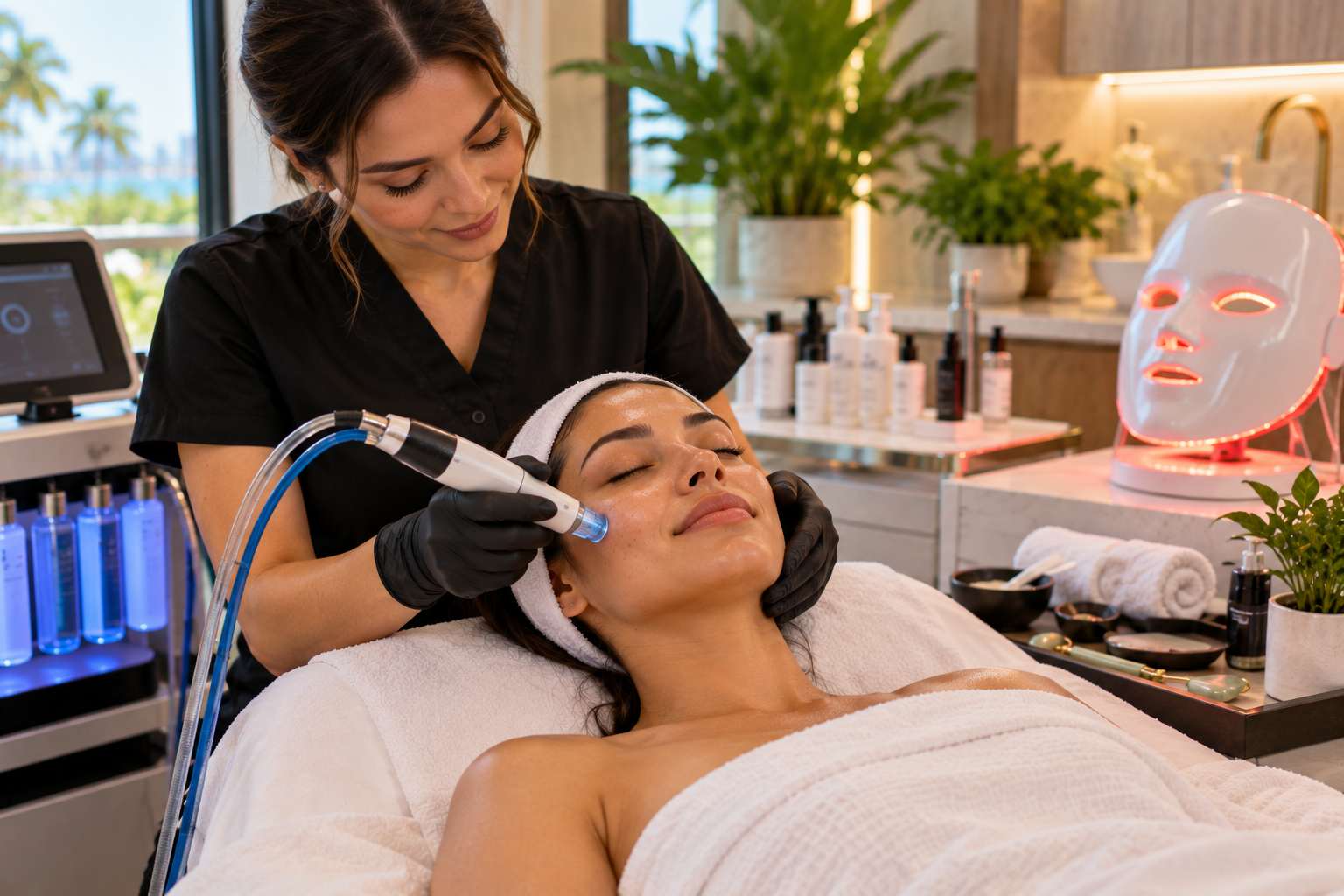
A beauty med spa can combine professional treatments, targeted home care, and sun protection to gradually fade the look of spots and even out your tone. At SB Spa, the main options are Aerolase laser treatments, the Cosmelan depigmentation system, and professional peels, chosen according to your pigment type, skin tone, and schedule.
Aerolase for hyperpigmentation and melasma
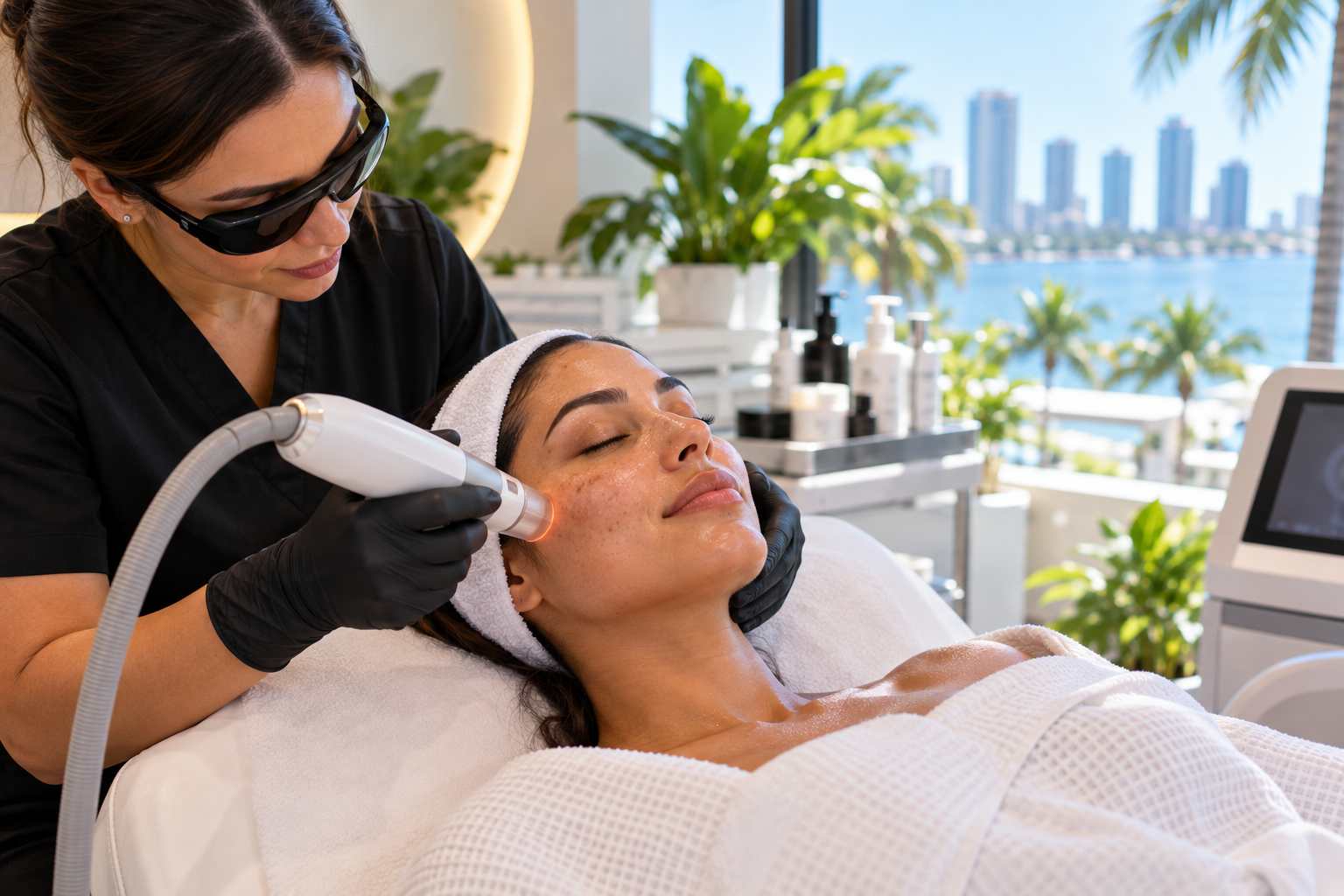
The Hyperpigmentation and Melasma treatment uses Aerolase laser technology to target excess pigment on the face, neck, décolletage, and hands. The 650-microsecond Aerolase is widely used across many skin tones, including deeper skin, and settings are customized to reduce the risk of irritation and discoloration.
Most clients begin to see noticeable results in 3 to 5 sessions spaced a few weeks apart, with improvement building as the skin renews itself. Many people find treatment comfortable, and downtime is typically minimal, though temporary redness can happen and no laser is completely without risk.
The Cosmelan Package for stubborn pigment
The Cosmelan Package is a professional depigmentation system by Mesoestetic designed for the face. It includes an in-office treatment, home-care products, and four follow-up visits, which makes it a structured, guided option for melasma, sun spots, and post-inflammatory pigmentation.
Expect mild to moderate peeling for about 5 to 7 days afterward. Improvement often begins within about two weeks and continues as you follow the home-care routine, so consistency at home is just as important as the in-office visit.
Professional peels for overall tone
For clients who want brighter, more even skin with a gentler pace, the Chemical Peel Facial and BioRePeel can help refresh dull skin and soften the look of dark spots over a series of visits. Peels are often used on their own for mild unevenness or alongside other treatments as part of a broader plan.
Sun-damaged hands
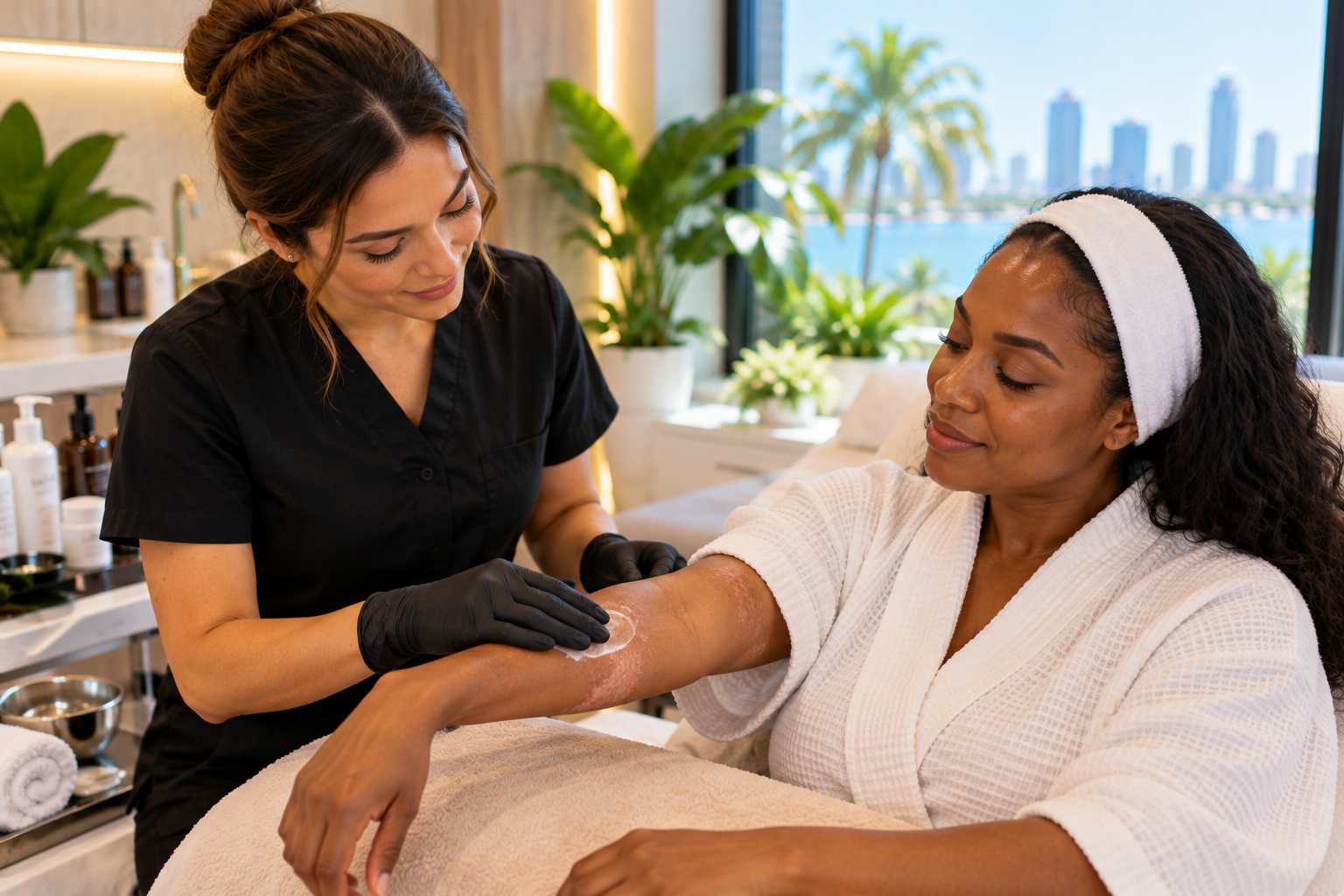
Hands often give away sun history long before the face does. Aerolase Hands focuses on sun spots, fine lines, and crepey texture on the backs of the hands, with many clients seeing improvement after 2 to 3 sessions and 4 to 6 recommended for deeper concerns.
Is Aerolase or Cosmelan Better for Melasma?
Neither is better for everyone. Aerolase is a series of quick in-office sessions with little interruption to your routine, while Cosmelan is a more intensive, guided program with several days of peeling and a strict home-care routine.
Aerolase often suits people who want to keep a busy schedule moving and prefer gradual improvement across several visits. Cosmelan often appeals to people with more established patches who are ready to commit to the home routine and can plan around a week of visible peeling. Your esthetician will help you weigh your skin tone, the depth of your pigment, your calendar, and how much sun you expect to get in the coming months.
Whichever path you choose, it helps to know that melasma is a long-term condition. It can fade significantly, yet it can also return with sun, heat, or hormonal changes. The American Academy of Dermatology notes that ongoing sun protection helps melasma fade and lowers the chance it comes back.
Who Tends to Struggle With Pigment the Most?
Anyone can develop dark spots, but certain groups tend to notice them sooner or find them harder to manage. Knowing where you fit can help you and your esthetician choose the right starting point.
Women navigating hormonal changes
Melasma is far more common in women, and hormonal shifts from pregnancy, birth control, or other life changes can trigger or deepen it. If you are pregnant or breastfeeding, talk with your healthcare provider first, and your candidacy for any pigment treatment will be confirmed at consultation. Many women find that a calm, step-by-step plan feels much better than chasing every new product on the shelf.
Men who live outdoors
Men in Tampa often spend hours on the water, the golf course, or job sites, and many skip daily sunscreen. The result is often sun spots on the cheeks, forehead, ears, and hands, plus a rougher, weathered texture. A simple routine of laser sessions, a lightweight daily SPF, and a hat can make a visible difference without a complicated regimen.
Clients who want a guided, high-touch experience
If you prefer a polished, all-in-one experience, a structured program like the Cosmelan Package, with its included home-care products and follow-up visits, keeps the planning in expert hands. Pairing pigment visits with a relaxing facial or massage also turns maintenance into something you look forward to.
When Should a Dark Spot Be Checked by a Dermatologist First?
Any spot that is new, changing, raised, bleeding, itchy, or irregular in shape or color should be evaluated by a dermatologist before any cosmetic treatment. Cosmetic pigment care is meant for spots that have already been identified as harmless.
With so much sun exposure in Florida, a yearly skin check with a dermatologist is a smart habit for everyone. Once you have that peace of mind, a beauty med spa can focus on helping your skin look clearer and more even.
How Do You Keep Spots From Coming Back in Tampa?
The single most effective step is daily sun protection, every day of the year, including cloudy days and quick errands. The American Academy of Dermatology recommends a broad-spectrum sunscreen with SPF 30 or higher, plus water resistance when you will be sweating or swimming.
A few other habits help protect your results:
- Reapply sunscreen during long outdoor days, especially on the water.
- Wear a wide-brimmed hat and sunglasses for walks, games, and boat days.
- Stick with the home-care products your esthetician recommends.
- Avoid picking at breakouts, which can leave new dark marks behind.
- Schedule maintenance visits as recommended.
Timing can help too. Many Tampa clients like to start pigment work in the cooler, lower-UV months of fall and winter, when it is easier to stay out of strong sun while the skin settles. Sun protection still matters year-round in Florida, so the habit should stay with you in every season.
Frequently Asked Questions
How many sessions does it take to fade sun spots?
It depends on the type and depth of your pigment. With the Aerolase Hyperpigmentation and Melasma treatment, most clients begin to see noticeable results in 3 to 5 sessions spaced a few weeks apart.
Can melasma be removed for good?
Melasma can fade significantly with treatment and diligent sun protection, but it can return with sun exposure, heat, or hormonal changes. Maintenance visits and daily SPF help keep it under control.
Is a beauty med spa treatment for pigment safe for deeper skin tones?
Deeper skin tones can be treated, and settings and products are customized for each skin type and tone to reduce the risk of irritation and discoloration. No treatment is risk-free, so your esthetician will review your history and goals at consultation.
Is there downtime after pigment treatment?
Aerolase sessions typically involve little downtime, sometimes with temporary redness. The Cosmelan Package involves mild to moderate peeling for about 5 to 7 days, so plan around important events.
What is the best time of year to treat dark spots in Tampa?
Fall and winter are popular because UV levels are lower and outdoor plans are easier to manage. You can begin at any time of year as long as you commit to daily sun protection.
Keep the Sunshine, Lose the Spots
You do not have to give up your Bayshore walks, boat days, or long lunches on the patio to have clearer, more even skin. With the right plan, steady sun protection, and a little patience, sun spots and melasma can become far less noticeable, and you can enjoy every bit of Tampa's sunshine with more confidence.
With more than 20 years of experience in advanced skin and body care, SB Health & Beauty Med Spa brings together licensed estheticians, personalized plans, and a calm, welcoming setting. You can learn more about our team, including Dr. Gavin Sigle, Medical Director, or explore our uneven skin tone and hyperpigmentation and sun damage concern pages.
Ready to start your plan? Visit SB Health & Beauty Med Spa at 116 S Oregon Ave. in South Tampa, call (813) 259-3606, or contact us to book your consultation through the website.
Related Articles